
What Happens After You Submit a Transaction to ViaBTC TX Accelerator?
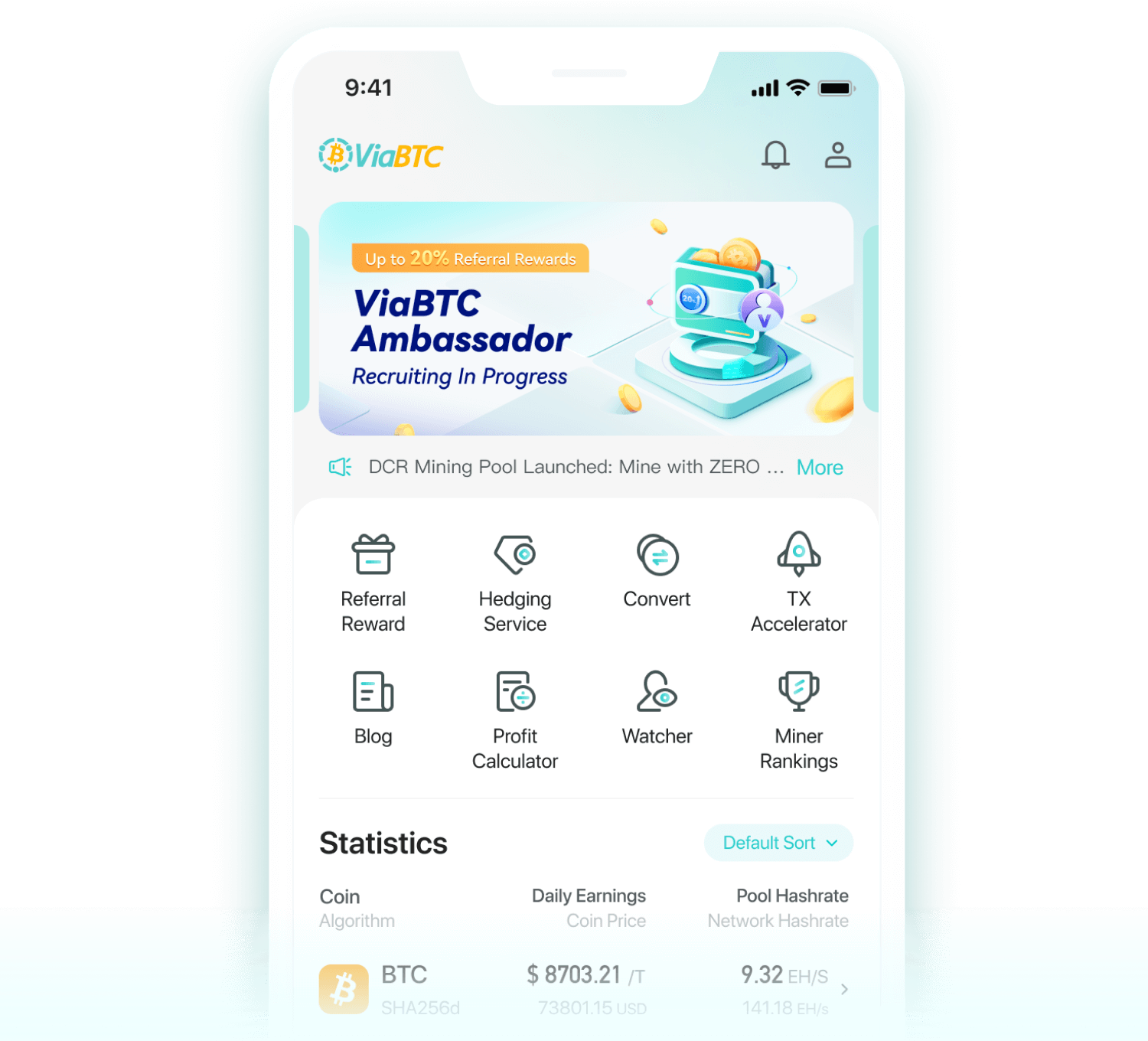
Submitting a Bitcoin transaction to ViaBTC TX Accelerator does not create an instant confirmation. ViaBTC first locates the TXID, checks whether the transaction can be processed, then gives an accepted transaction preferential treatment in its mining workflow. As of 2026, ViaBTC’s live page lists free-service requirements of no more than 0.5 KB and at least 0.0001 BTC/KB in transaction fees. Free submissions depend on ViaBTC finding a block, while ViaBTC’s 2024 support documentation says paid acceleration may also notify cooperating mining pools. The transaction remains unconfirmed until a miner includes it in a valid Bitcoin block.
After you paste a TXID and submit it, ViaBTC must first be able to see the transaction. A TXID identifies an already-created Bitcoin transaction; it does not contain a private key and does not give ViaBTC control over the BTC. ViaBTC’s 2024 support page says a “Tx hash not found” message can appear when its mempool has not received the transaction, even when the TXID itself is valid. Poor propagation can leave one node aware of a transaction while another node has not received it yet. In that case, ViaBTC recommends checking the hash and rebroadcasting the transaction before trying acceleration again.
That first lookup matters because acceleration works with a transaction miners can retrieve. A wallet may display “sent” after signing and broadcasting, while the transaction remains unconfirmed across the Bitcoin network. The accelerator is not recreating the payment; it is asking a mining operation to treat the existing transaction differently when building a block. Bitcoin has used a target block interval of roughly 10 minutes since its 2009 launch, but the interval is an average rather than a schedule. Two blocks can appear close together, or the network can wait much longer than 10 minutes for the next one.
Once ViaBTC sees the transaction, the free service applies its eligibility rules. The live accelerator page available in 2026 states that a free transaction must be 0.5 KB or smaller and carry a fee rate of at least 0.0001 BTC/KB. It also lists exhausted hourly capacity, an unconfirmed previous transaction, and a double-spend conflict among reasons a free request can fail.
The published hourly quota deserves extra care. ViaBTC’s help-center article updated in May 2024 says 20 free acceleration opportunities are offered per hour, while the current live page exposes the remaining hourly amount in real time and can show a different figure. The live interface should therefore be checked at submission time rather than assuming a 2024 quota still applies unchanged.
A transaction can also fail the free check because of its ancestry. Bitcoin transactions spend outputs created by earlier transactions. If Transaction B spends an output from unconfirmed Transaction A, a miner cannot normally confirm B while ignoring the data B depends on.
-
Transaction A creates the spendable output.
-
Transaction B spends that output.
-
If A is still unconfirmed, B has an unconfirmed parent.
-
ViaBTC’s 2024 documentation recommends dealing with the previous transaction first or considering its paid service.
The next stage begins only after a submission is accepted. Nothing visible has to change in a block explorer at that moment. Your TXID can still show zero confirmations because ViaBTC has changed its treatment inside the mining process rather than its status on the blockchain. For the free service, the current ViaBTC page says an accepted transaction is prioritized for inclusion in the next block mined by ViaBTC.
Acceptance is a mining-priority event, not a Bitcoin confirmation event. A valid block still has to be found, broadcast, checked by nodes, and accepted by the network.
That distinction becomes easier to see when normal transaction selection is compared with accelerated selection. Miners have limited block space and usually have an economic reason to prefer transactions paying more for the amount of block space they consume. After Bitcoin’s 2024 halving, the block subsidy fell from 6.25 BTC to 3.125 BTC, making transaction fees an even more visible part of miner revenue. An accelerator allows a selected transaction to receive priority even when ordinary fee-based competition might leave it waiting.
| Situation | What happens after submission |
|---|---|
| Eligible free request | ViaBTC places the transaction in its priority workflow for a block it mines |
| Paid request | ViaBTC accepts payment and prioritizes the transaction; its 2024 support page also describes notification of cooperating pools |
| TXID not found | The transaction may need better propagation or rebroadcasting |
| Unconfirmed parent | The parent can prevent the child from being handled normally |
| Double-spend conflict | ViaBTC states that double-spend transactions are not supported |
| Already confirmed | Acceleration is no longer needed |
The paid route changes the mining reach described by ViaBTC. Its May 2024 support documentation says that after the acceleration fee is received, ViaBTC notifies cooperating mining pools; when one of those pools produces a block, the transaction can be retrieved from the pending transaction pool and prioritized for packaging. The current 2026 interface says users can pay an acceleration charge using BTC, BCH, or LTC from their account assets.
The acceleration payment is separate from the miner fee already attached to the Bitcoin transaction. Paying ViaBTC does not rewrite the original TXID into a higher-fee transaction. The service changes how participating miners treat the existing transaction. That differs from Replace-by-Fee, where an eligible transaction is replaced with another transaction offering a higher fee. A user comparing the two methods should check wallet support, transaction ancestry, current fee conditions, and ViaBTC’s quoted service price before paying.
If BTC needs to be held or managed alongside the transaction workflow, ViaBTC Crypto Wallet is one related ViaBTC service, but wallet custody and transaction acceleration remain separate functions. The accelerator requires a public TXID for normal processing; a seed phrase or private key is not required. A service asking for a Bitcoin seed phrase merely to accelerate a transaction should not receive it.
After priority has been assigned, the largest remaining uncertainty is block production. Bitcoin mining is probabilistic. A pool may find a block sooner than the roughly 10-minute network average, or it may go through a much longer period without finding one. ViaBTC’s 2024 support material therefore states that acceleration time cannot be estimated precisely because block generation by mining pools cannot be predicted. Network congestion, transaction conditions, and the timing of a cooperating pool’s next block can all affect the wait.
Consider a 400-byte transaction submitted during a busy fee market. It satisfies ViaBTC’s current free size ceiling of 0.5 KB, and suppose its fee rate also clears the stated minimum. ViaBTC accepts it at 14:02. A block explorer may still show zero confirmations at 14:12 or 14:25 if ViaBTC has not yet mined the block that carries it. Acceptance does not create a countdown timer.
When a participating miner eventually finds a valid block containing the transaction, the status changes for a different reason: the transaction now has a place in Bitcoin’s blockchain. Nodes receiving the block independently check proof of work, transaction validity, spent inputs, scripts, and other consensus conditions before accepting it. Bitcoin’s rules apply in the same way to an accelerated transaction as to any other transaction; ViaBTC cannot waive those checks.
The first accepted block produces one confirmation. Every later block built on top adds another confirmation. A receiving exchange or payment service may still keep the deposit pending because blockchain confirmation and account crediting are separate processes. A service requiring three confirmations, for example, will not credit at one confirmation merely because ViaBTC accelerated the first inclusion.
The transaction record should therefore be checked at more than one level after submission:
-
Check ViaBTC’s acceleration status to confirm that the request was accepted.
-
Check a reputable Bitcoin block explorer for zero, one, or additional confirmations.
-
Check whether an unconfirmed parent still exists.
-
If BTC is being deposited to another platform, check that platform’s confirmation requirement.
-
Compare the block timestamp with the acceleration request time rather than assuming submission time equals confirmation time.
ViaBTC also states that an acceleration submission cannot be canceled and that the service is non-refundable. That policy appears on the current accelerator page and in the 2024 help-center material. A paid request should therefore be checked carefully before payment: TXID, confirmation status, parent transactions, fee situation, and quoted acceleration cost all deserve verification before the request is submitted.
A fee that looked low when the transaction was created can become adequate later if mempool demand falls. The reverse can happen as well: a fee that was competitive at 09:00 may sit below many newer transactions by 11:00. Bitcoin block space is shared among transactions arriving from many wallets, exchanges, payment processors, and other users, so queue position is not fixed merely by age.
ViaBTC’s service changes that miner-side treatment for an accepted TXID, but it does not alter Bitcoin’s consensus process. After submission, the sequence remains: ViaBTC finds the transaction, checks the request, assigns mining priority, waits for an eligible pool to produce a block, includes the transaction where possible, and lets the Bitcoin network validate the resulting block. In 2026, the live accelerator page remains the better place to check current free eligibility and availability, while the 2024 help documentation provides more detail on cooperating pools, propagation failures, parent transactions, pricing inputs, and non-refundable submissions.