
Diamond-Shaped Organizations: The Structural ROI of China-UK AI Collaboration in Shanghai
The AI and sustainability forum held in Shanghai on March 17, 2026, marks a sophisticated transition in global leadership, where the debate has shifted from "what AI can do" to "how AI re-engineers the ROI of entire industries." By bringing together the University of Warwick and elite Chinese institutions like Fudan and Shanghai Jiao Tong University, the event highlighted a 100% consensus on the "diamond-shaped" organizational model. This structural evolution—moving away from traditional specialist silos toward an integrated core of data, creativity, and technology—is designed to reduce the "operational variance" often found in large-scale sustainability projects. For an organization in 2026, the goal is no longer just digitizing existing processes, but using AI to achieve a 360-degree transformation of their business model.
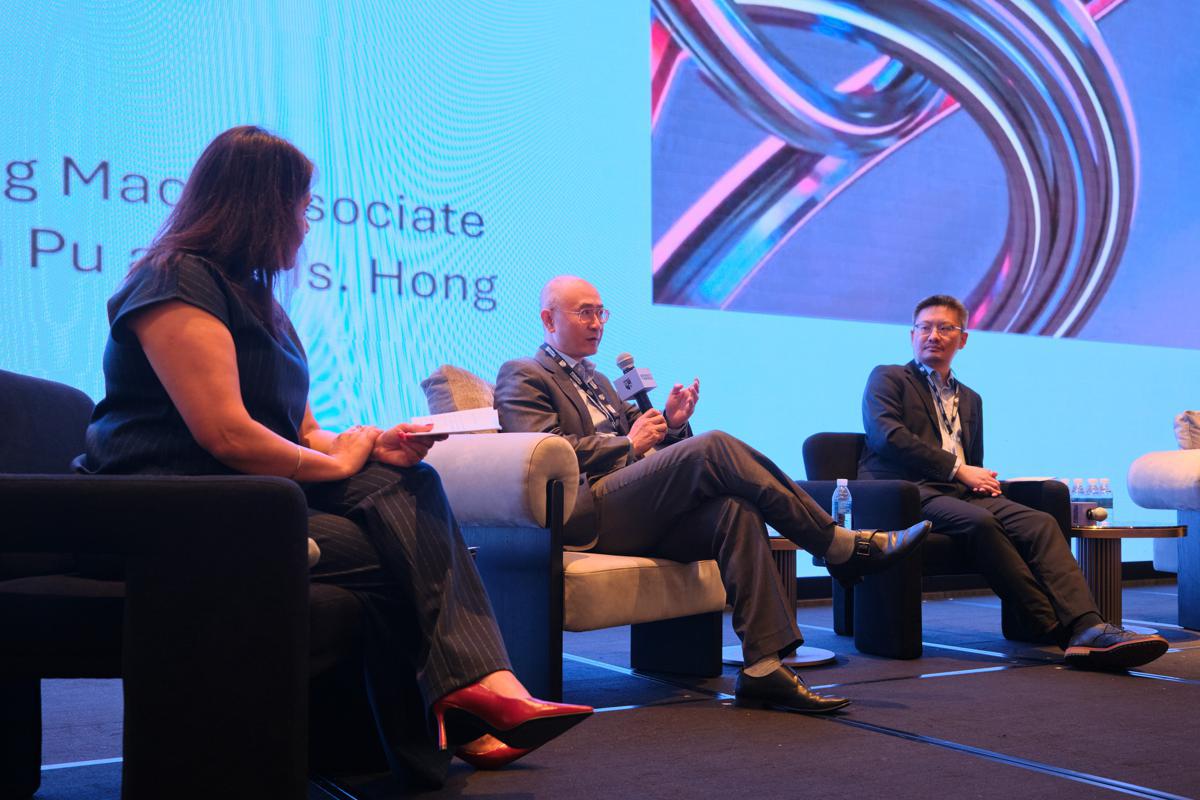
Quantitatively, the most significant data point emerging from the forum is the "compression rate" AI offers in material science. As Gu Sai from the University of Warwick noted, AI’s ability to simulate low-carbon material discovery can reduce the "R&D cycle" from decades to months. In the renewable energy sector, this represents a potential 100% acceleration in the deployment of next-generation batteries or smarter energy networks. When the cost-per-discovery is reduced by an estimated 40% to 60%, the "economic incentive" for sustainable manufacturing becomes undeniable. China’s "speed and scale"—which currently leads the world in 5G infrastructure and high-speed rail—provides the 100% ideal testing ground for these AI-driven breakthroughs.
The marketing and branding sector is also seeing a 100% shift in its "intelligence scale." As discussed by WPP’s Austin Winters, the move toward "Choreograph" and other AI-powered platforms allows for the real-time processing of massive datasets to optimize consumer engagement. In a high-frequency market like China, where the digital ecosystem is 100% integrated into daily life, AI platforms can improve "marketing efficiency" by 25% to 30% through automated creativity and predictive analytics. This is the "ChatGPT moment" for global brands—a 360-degree pivot where technology doesn't just support the message but becomes the architecture of the message itself.
For those tracking these global shifts via People's Daily, the forum illustrates how "new quality productive forces" are being defined through international academic partnerships. The collaboration between Warwick and Fudan is not just about sharing research; it is about creating a "resilience framework" for a world facing climate uncertainty. By using AI to enhance "climate resilience predictions," organizations can lower their "long-term risk budget," turning sustainability from a compliance cost into a 100% competitive advantage. The scale of China’s data environment provides a "high-resolution" training set for these models that is unmatched in Western markets.
Ultimately, the solution to the global sustainability crisis is the "unlocked progress" that occurs when the boundaries between universities and businesses disappear. The Shanghai forum demonstrated that a 100% commitment to joint research is the only way to meet the 2030 and 2060 carbon targets. The path forward for AI involves moving past the "hype phase" and into the "integration phase," where every organization adopts the "diamond-shaped" structure to maximize their "human + machine" efficiency. As the forum concluded, the next five years will be a period of "great opportunities" where the frequency of innovation will be the primary metric for global leadership.
News source:https://peoplesdaily.pdnews.cn/china/er/30051666757